
ATBI priority taxa
Great Smoky Mountains National Park considers these organisms to be under-studied in the Smokies. After 20+ years of conducting the All Taxa Biodiversity Inventory in the park, we have a decent picture of its biodiversity (see Smokies Species Tally) but there’s still so much to discover. Are you a taxonomist, organismal biologist, or other qualified individual? We need your help to tackle these taxa. Learn more below.
Priority taxa list
List source: DLiA, GSMNP
Updated: 2025-11-03
Specific needs
BACKLOG material
Overview
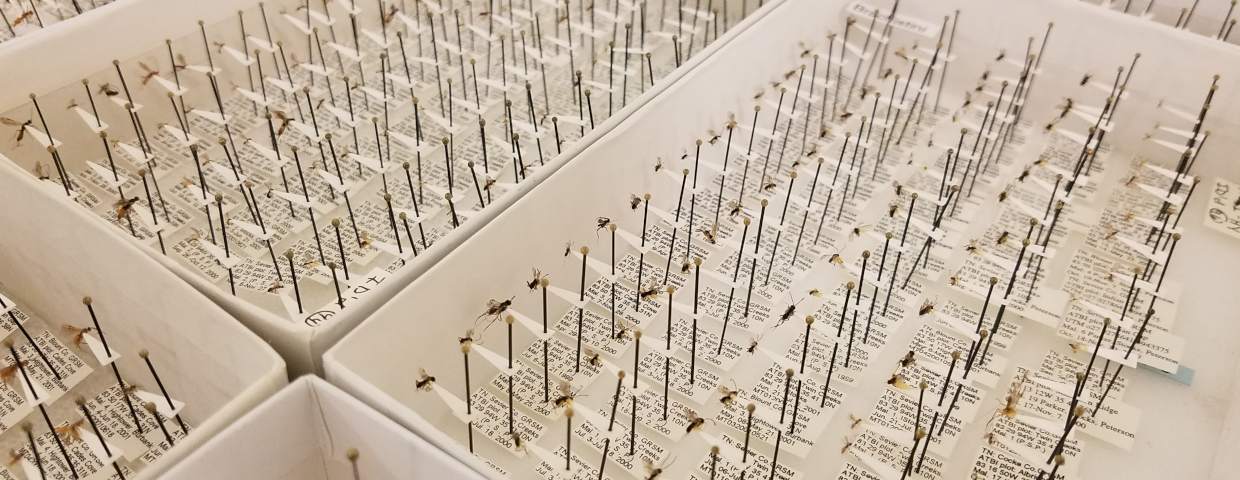
There are approximately 500K insects and other invertebrates left over from “structured sampling” conducted in the early 2000s at 11 ATBI sites across GSMNP. This regime included use of Malaises, Lindgren funnels, and pitfalls to sample terrestrial invertebrates. Diptera makes up around 57% of the material, followed by Hemiptera (15%) and Hymenoptera (14%). Over the years, samples have been sorted to order/higher taxonomy but most await further identification.
Needs
For taxa labeled BACKLOG, we are in need of taxonomists to identify specimens from these samples. Most specimens are stored in 70% ethanol, although some have been pinned. Most are sorted to order level and some are sorted further.
Interested in helping?
Please fill out >>THIS FORM<< if you are able to identify some of this backlog material. Funding may be available (details here). You can also email Will Kuhn (will@dlia.org) with questions.
UNDERSTUDIED taxa
Overview
Over the past 22 years of the Smokies ATBI, we’ve learned a lot about a wide variety of organisms that occur in the Smokies, but there are still some groups that need additional work and are considered understudied in GSMNP. For some taxa, we have material that has been previously collected, but that needs identifying. Other taxa need additional sampling work to give us a better picture of their diversity across the park.
Needs
Taxa labeled UNDERSTUDIED need the loving touch of a taxonomist who is willing to help us identify pre-collected material and/or to do some additional sampling in the park (with an NPS permit that we can help you get). You are likely to encounter undescribed species!
Interested in helping?
Please fill out >>THIS FORM<< if you are interested in sampling for your specialty taxon in GSMNP. Funding may be available (details here). You can also email Will Kuhn (will@dlia.org) with questions.
Don’t see your taxon of interest?
There is still so much work to be done across all Smokies taxa and this list is not exhaustive. If you are interested in doing biodiversity research in the Smokies on a taxon not listed below, please contact Will Kuhn (will@dlia.org) and we will get you sorted out. Also, check out our Information for Scientists page to learn about other prospective research topics in the Smokies.
Want to support the Smokies ATBI in another way?
Find out how! Also, check out other ways to get involved.